A population simulation from Georgetown, in JAMA Network Open on 10 November 2026, estimates that the most cytotoxic breast-cancer chemotherapy regimens cost 9.4 years of remaining life through earlier onset of ageing-related diseases. It is a model, not a trial following real patients for decades.
A Brazilian study in Neurology followed 12,772 adults for 8 years: the heaviest consumers of artificial sweeteners showed cognitive decline 62% faster — about 1.6 extra years of brain ageing — mainly in memory. The risk was highest under 60 and in people with diabetes; over 60, no effect was seen.
In Aging Cell, 2 November 2026 (Chen et al.): an NHANES analysis of 10,977 US adults found that people who consumed EGCG — the tea polyphenol, 99.55% of it from tea, mostly black and green — had PhenoAge acceleration 0.53 years lower (low intake) and 0.62 years lower (high intake) than non-consumers, and lower all-cause mortality (HR 0.83 and 0.82) over 7.9 years of follow-up.
Karolinska Institutet, in the Journal of the American Heart Association on 5 November 2026: UK Biobank, 408,977 adults (mean age 56.5), of whom 54,017 (13.2%) had type 2 diabetes, heart disease or stroke. Those with good sleep quality showed better cognition and larger total, grey- and white-matter brain volume than poor sleepers — and the link was clearest in people with cardiometabolic disease.
An NHANES 1999–2006 analysis, published in The Journal of Nutrition on 26 October 2026: 6,025 adults aged 60 and over with blood levels of alpha- and gamma-tocopherol, followed for 12.1 years. The highest alpha-tocopherol group had 16% lower all-cause mortality and 35% lower cancer mortality; the highest gamma-tocopherol group had 37% lower Alzheimer's mortality.
In The Journal of Nutrition, reported 3 November 2026: 17,368 participants in US and European studies, seven dietary patterns. Following the Mediterranean diet continuously was linked to better overall cognition; Mediterranean and DASH to better executive function. In long-term follow-up, only the MIND diet kept better executive function over time (in three US cohorts).
A University of Georgia study in the Journal of Neurology followed more than 8,200 adults over 50 for 24 years: higher body mass index was linked to faster decline in memory, general cognition and executive function, most strongly after 65.
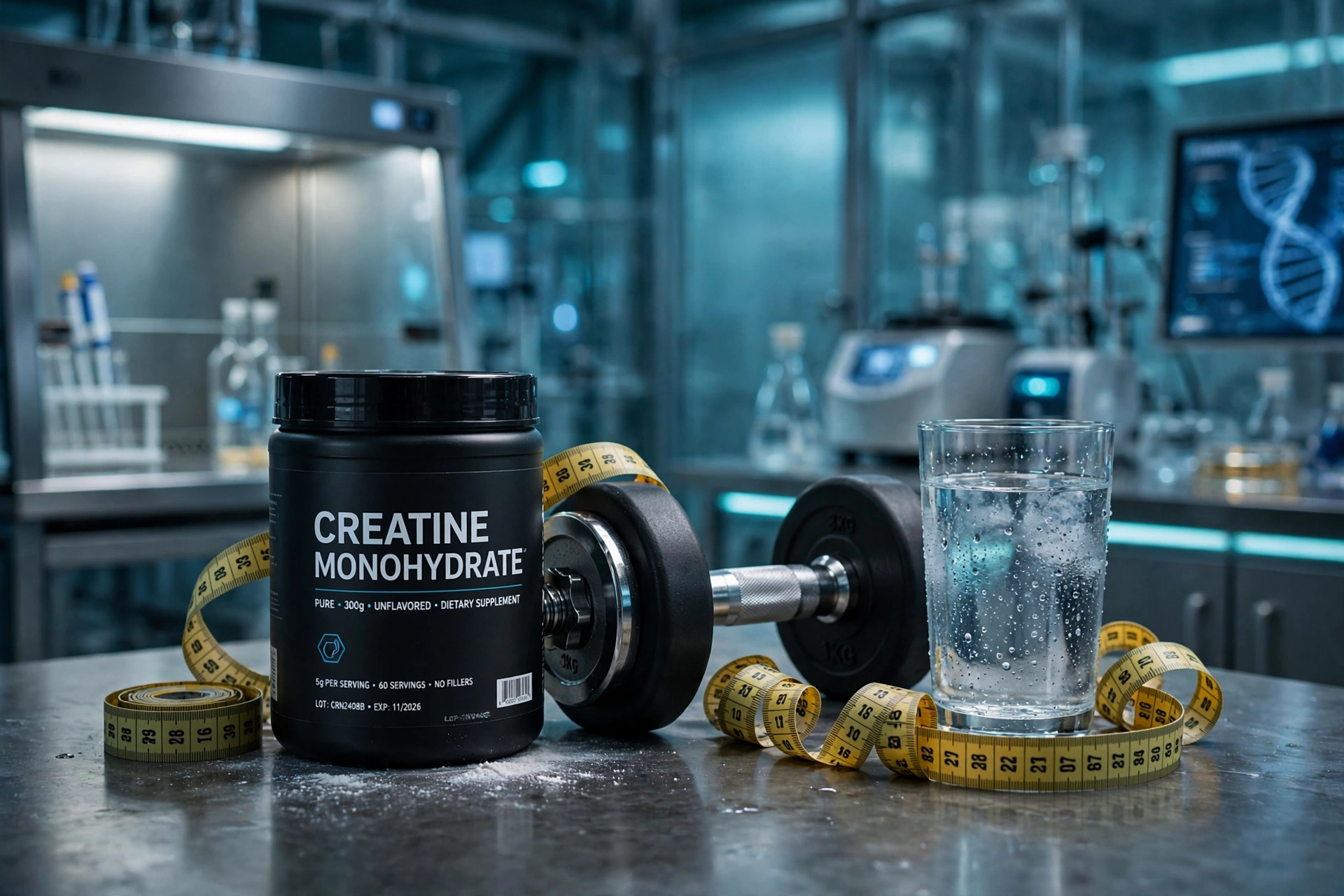
A Texas A&M study in the Journal of the International Society of Sports Nutrition: 64 sedentary adults aged 45 to 65 took 10 g of creatine a day for 12 weeks. Without exercise, the creatine group gained about 1.1 kg of DXA lean tissue and improved on leg and bench press.
The Dutch IMPACT trial, in the American Journal of Clinical Nutrition 2026: 108 adults aged 55 and over (median 66, 58% women) did strength training three times a week for 12 weeks. One group ate mostly plant protein, the other a standard diet, both aiming for at least 1.2 g/kg a day. Both gained strength and muscle; there was no difference in strength or function between groups.
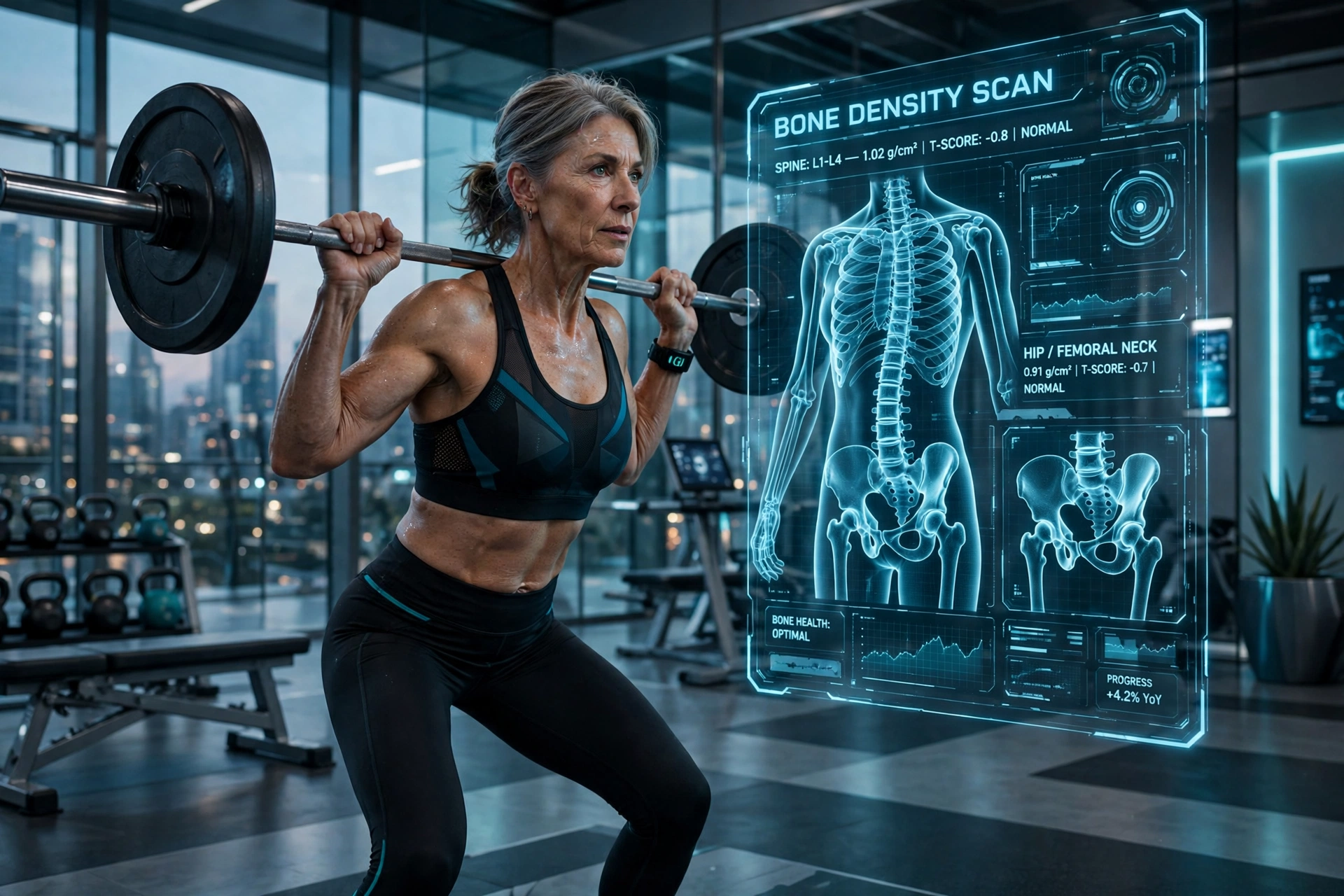
A 2026 meta-analysis (Isenmann et al.), in the Journal of Science and Medicine in Sport: 126 studies, 4,019 healthy women (two-thirds postmenopausal, mean age 50.9). Strength training improved strength almost equally before and after menopause (SMD 1.46 post- vs 1.50 pre-menopause, no significant difference). Bone gained little: in 17 randomised trials (690 women) it rose in the lumbar spine, femoral neck and total hip, but only by +0.01–0.02 g/cm² in absolute terms.
In BMC Geriatrics 2026, an exploratory randomised 3-arm trial: 36 very old adults with sarcopenia and mild cognitive impairment, 8 weeks, three times a week, low-load strength (about 30% of 1RM) with blood-flow restriction (BFR) versus the same load without BFR versus no exercise. BFR improved grip strength, 4-metre gait, verbal learning and delayed recall versus no exercise.
A University of Missouri pilot in the Journal of Cerebral Blood Flow & Metabolism: four weeks of low-dose daily rapamycin improved cerebral blood flow in healthy adults aged 45 to 65 who carry APOE4 — the variant that greatly raises Alzheimer's risk — but not in non-carriers.
In Sleep Medicine, Emory (Victoria Pak): 54 adults, mean age about 67, with mild cognitive impairment and sleep problems. Those who reported taking 5,000 IU a day or more of vitamin D scored more than 13% higher on the MoCA test — about 4 points — than those taking no supplement.
In Alzheimer's Research & Therapy, reported 10 November 2026: 116 adults at Hospital Clínic, Barcelona, one night of polysomnography — 30 cognitively healthy without amyloid, 45 healthy with amyloid (preclinical) and 41 with mild impairment or mild Alzheimer's dementia. Slow-wave power was already reduced in the preclinical group, and 15–21% lower in early Alzheimer's than in healthy people without amyloid.
A University of Chicago study, 6 November 2026: vanadyl sulfate, a cheap mineral supplement used for blood sugar, acted as a potent senolytic in old male mice — 90 days in drinking water improved muscle endurance, cut visceral fat, reversed liver and kidney decline, and lengthened median post-treatment life by about 17% (+65.5 days). No human data.
Three more agenda announcements for CTAD 2026 (Boston, 16–19 November). Genentech/Roche brings 16 abstracts, updated trontinemab data, the phase III PrevenTRON design and the new phase II TARBELA-AD trial of the oral NLRP3 inhibitor RG6434. Alzheon launches ORION-E4, a second phase III of oral valiltramiprosate. Biomed Industries presents NA-831 phase 2 data: +4.1 points on ADAS-Cog-13 versus placebo.
To watch — CTAD: the first results arrive on Monday 16 November; The Age Vanguard will report them as they are presented — trontinemab, AR1001 at 16:05 EST, the NA-831 posters, five-year lecanemab and Biogen's diranersen.
Pierre-Edouard Sottas (xLongevity Center, Vevey), in Aging on 20 October 2026: a theoretical proposal that starts from Blagosklonny's hyperfunction and distinguishes systemic load from systemic gain to explain why ageing accelerates late in life.
Participants in the Karolinska sleep study in the Journal of the American Heart Association — the largest study in this edition. An observational study, not a trial. (see the sleep story)
Myths vs. Science
Myth: “Vitamin E supplements protect against Alzheimer's.”
Science: In 6,025 adults over 60, higher blood levels of gamma-tocopherol were linked to 37% lower Alzheimer's mortality — but nobody in the study took a supplement. Blood levels are not a prescription. (see the vitamin E story)
Biohacking for Older Adults — 1 tip, no promises
No drug advice. This edition's tip is about sleep, not pills: “Good sleep tracked with better cognition and larger brains in 408,977 people. But the study is observational — treat sleep as a habit to protect, not a treatment.” Based on this edition's own evidence standard.
For Tomorrow
Tomorrow: CTAD opens in Boston on Monday 16 November. Watch for trontinemab data, the AR1001 phase 3 topline at 16:05 EST, the NA-831 posters, five-year lecanemab and Biogen's diranersen. Nothing published today is available as a treatment outside a trial.