What happened
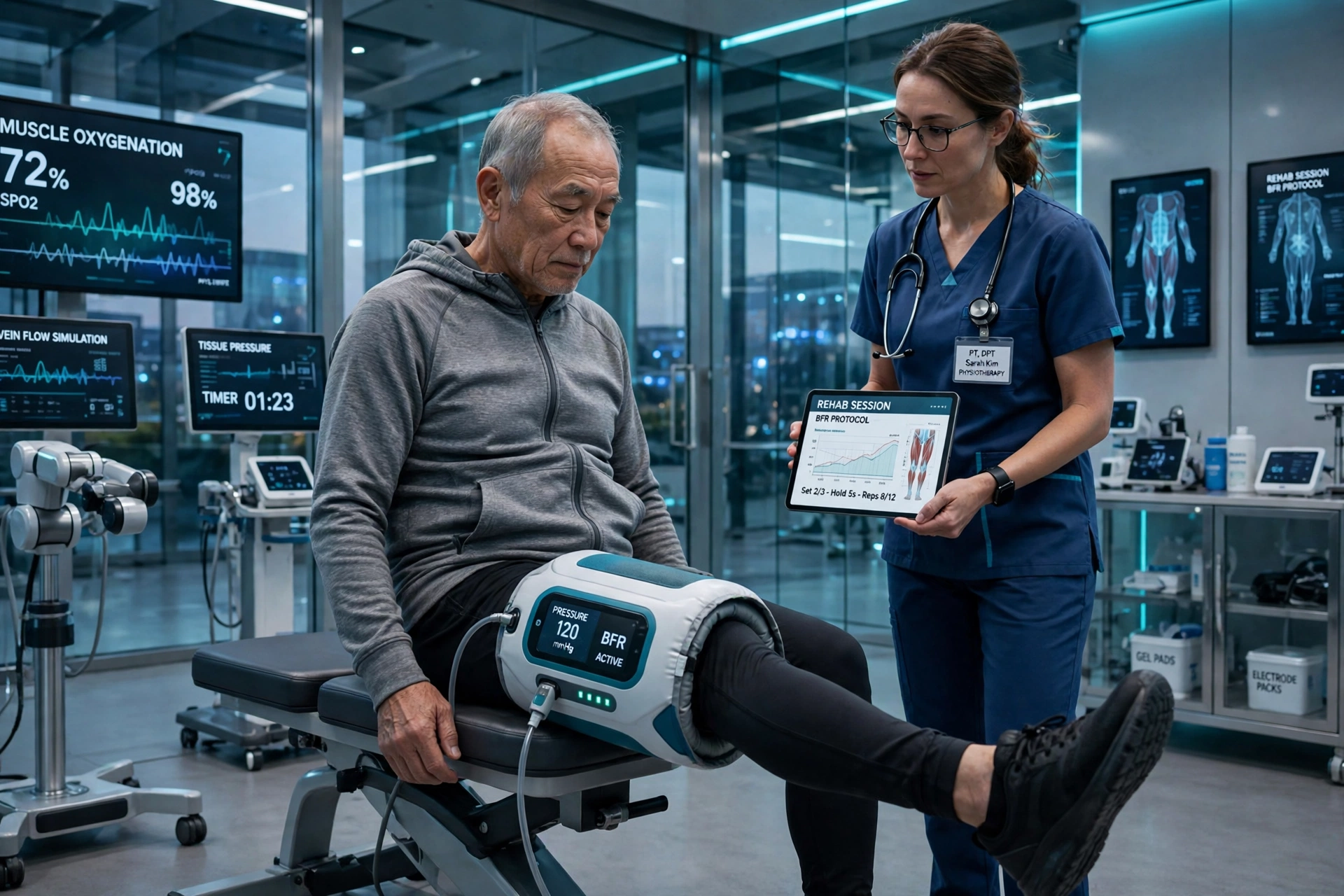
The trial ran 8 weeks, three times a week, in 36 very old adults with sarcopenia and mild cognitive impairment. Low-load strength training (about 30% of one-repetition maximum) with blood-flow restriction improved grip strength, 4-metre gait, verbal learning and delayed recall compared with no exercise.
The extra advantage over the same light load without BFR was limited — the clearest signal was in grip strength. Attendance was above 95%, with no serious adverse events. Biomarkers showed no signal after correction.
Why it matters
Heavy lifting is not an option for everyone: joints, balance and heart conditions rule it out. A supervised method that works at 30% of maximum load would open strength training to people who cannot lift heavy — if the result holds up in a bigger trial.
What comes next
This is a supervised option for people who do not tolerate high loads, not a general recommendation. The trial is exploratory, with 36 people and 8 weeks.
Exploratory, 36 people, 8 weeks; biomarkers showed no signal after correction. A supervised option for those who cannot tolerate high loads, not a general recommendation.